


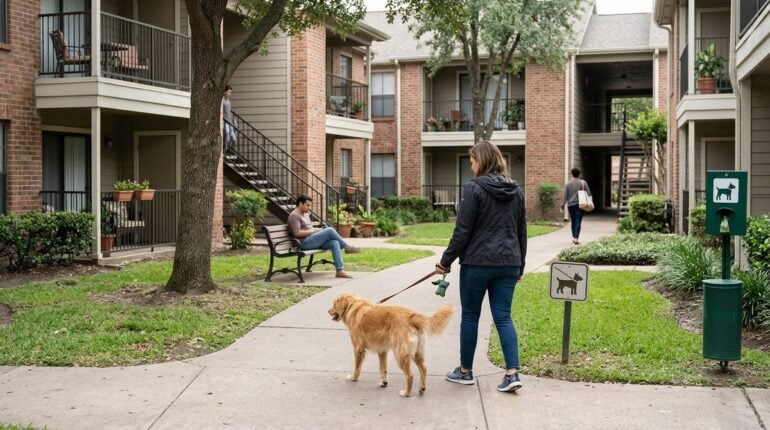
When shared dog-walking duties feels harder than it should, the cause is often a small gap between expectations and daily reality. A workable plan makes that gap visible without turning an ordinary task into a major project. Start by describing the situation in plain language, then decide what a helpful outcome would look like for the people involved. Keep the first improvement modest enough to try.
Start with the real situation
Write down the main conditions around shared dog-walking duties: the people involved, the setting, available time, materials, and constraints. Keep the description factual. A note about where confusion occurs is more useful than a judgment about someone’s attitude, because it points toward something that can change. Include limited space, shifting schedules, different experience levels, or a preference for privacy when those affect the task.
Next, ask what a good result means to each person involved. One person may value speed while another needs reassurance or room to decide. Those needs do not always conflict, but they should be surfaced early. Readers may also want to visit biz-kubo.net. Use outside information as a prompt, then choose an approach that fits the people and setting in front of you.
Agree on a simple starting plan
Turn the desired result into a small sequence that someone can follow. Divide the work into clear steps, make the responsible person explicit, and identify a backup when sensible. Use ordinary language rather than shorthand only a few insiders understand. A short written note can prevent repeated explanations, provided it is easy to find and kept current.
Decide how people will know that the plan is working. Choose an observable sign, such as a completed handoff, a calmer arrival, or a record that answers the next person’s question. Keep the check proportionate to the task. You can also visit Nurturingyoursuccessblog.com for more reading. Invite questions before treating the routine as settled.
A compact working checklist can help:
- Name the next action and who will take it.
- Keep essential details together and easy to find.
- Choose a check-in point to notice what needs adjusting.
Make communication easy
Most plans need a reliable way to share changes. Agree which channel carries the important update, what information belongs in it, and who needs to see it. Avoid scattering essential details across several conversations. A brief confirmation is especially useful when timing, ownership, or a person’s comfort has changed. Give people a chance to correct a misunderstanding before it shapes the next action.
Use a tone that leaves room for honest updates. People may hesitate to report a missed step if they expect blame, so focus first on what happened and what would help now. For a related read on this site, see Adapting an Independent Guesthouse for Extended Work Stays. Keep essential information accessible to the people who need it.

Try, observe, and adjust
Run the approach for a reasonable trial and notice both its benefits and its friction. Look for repeated questions, steps people skip, and moments when the arrangement creates unnecessary effort. Ask participants what they found easy or awkward. Their examples are more actionable than a general question about whether they liked the plan. Change one part at a time when possible so the effect is understandable.
Some issues call for help beyond an informal plan. Pause when a situation raises a health, safety, employment, accounting, or other specialist question. Do not treat a general article or personal experience as a substitute for informed advice. When there is uncertainty about a specialized matter, consult an appropriately qualified professional. A careful referral is part of a practical plan, not a failure to solve the problem.
Keep the useful parts
Once the routine is working, make it easy to repeat without freezing it forever. Store the relevant notes where participants naturally look, remove outdated instructions, and revisit the arrangement when people, schedules, or circumstances change. Thank people for sharing useful observations. Small acknowledgments can encourage future updates and help the process remain cooperative rather than feeling like another form to complete.
The aim is to make shared dog-walking duties clearer and more manageable. A routine should reduce uncertainty while leaving people room to use judgment. If the plan becomes burdensome, simplify it; if a new concern appears, pause and reconsider rather than relying on an outdated assumption. Share the final understanding with everyone involved, including what to do when the usual plan cannot be followed. That combination of clarity and flexibility makes the effort more durable.