


Key Takeaways
- Match your bear watching Alaska day trip to your travel style first—cruise passengers usually do better with guided same-day bear viewing tours, while road-trippers often need flexible wildlife stops that fit a longer Alaska route.
- Time it right: the best month to see bears in Alaska depends on what you want most, from early summer grazing to mid-summer salmon action at Brooks Falls and late-season giant brown bear feeding.
- Compare places honestly, not just by name—Katmai National Park, Kodiak Island, Pack Creek, Haines, and Kenai-area options all offer different logistics, costs, and walking demands for families age 5 and up.
- Ask about transportation before anything else, because bush flights, boat access, weather delays, and walking distance usually decide whether an Alaska bear viewing trip feels easy or exhausting.
- Understand guide safety rules, including spacing and the 3 bear rule, since good bear watching tours are built around bear behavior, food sources, and real-time conditions—not photo promises.
- Choose the Alaska bear watching option that fits your group’s stamina, budget, and tolerance for waiting, because the best wildlife trip is the one that works inside your actual vacation instead of taking it over.
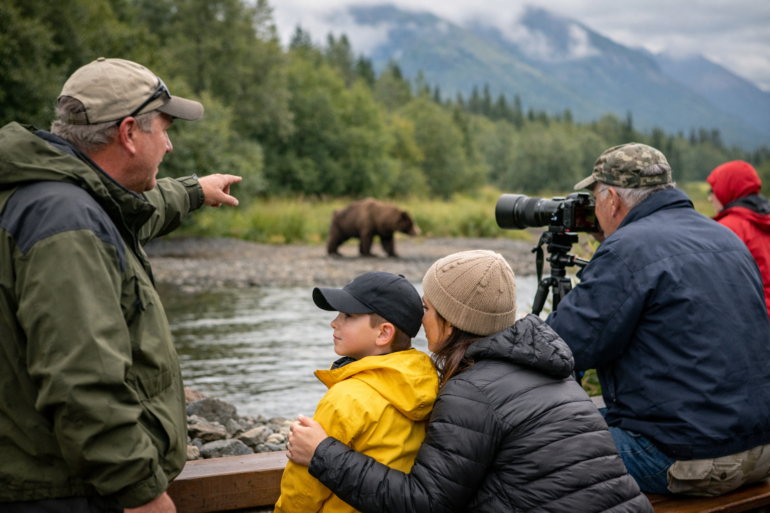
One open vacation day can disappear fast in Alaska—and the families who wait too long usually learn that after the best bear trips are already full. Bear watching Alaska demand has shifted hard toward guided day outings that fit around cruise calls, rail schedules, and long road-trip drives, especially for travelers bringing kids age 5 and up. That change matters, because the right bear day isn’t just about where the bears are. It’s about flight time, walking distance, bathroom access, weather backup plans, and whether a child can handle two quiet hours on a beach while a coastal brown bear feeds 150 yards away.
Guides know the difference instantly. A famous spot might look perfect in photos, yet be the wrong call for a mixed-age group. A less flashy option can work better—shorter transit, steadier viewing, less waiting, fewer meltdowns. And right now, that practical gap is shaping bookings more than postcard names are. Cruise passengers want a real wildlife day without blowing up the rest of the trip. Road-trippers want something unforgettable that doesn’t wreck the driving plan for the next morning. The honest answer isn’t always Brooks Falls or the biggest-name park. It’s the trip that fits the people taking it.
Bear watching Alaska right now: why family demand is shifting toward guided day trips
Demand is moving fast.
Families planning a cruise stop or a road-based Alaska loop are running into the same surprise: the best day trips are filling earlier, — bear viewing slots aren’t the flexible add-on they used to be.
Why cruise passengers and road-trippers are adding bear viewing to broader Alaska trips
For mainstream travelers, Bear watching Alaska now fits the trip they already booked. Cruise passengers want one high-impact wildlife day without committing to a remote lodge, while road-trippers on a kenai, seward, or soldotna swing are looking for a single guided outing that feels wild—but still works on a fixed schedule.
That shift is why searches for alaska bear watching tours keep climbing: people want a clear day-trip option, not a six-day bush plan. In practice, guides say the best bear watching in alaska for families is often the trip that matches transport time, walking distance, and attention span.
Worth pausing on that for a second.
What guides mean by a bear watching trip that works for age 5 and up
It usually comes down to three things—not hype:
- Shorter transfer times from ship or highway hub
- Predictable viewing setups, like platforms, boardwalks, or ranger-managed areas
- Simple safety rules that kids can follow
That matters on a wrangell bear watching tour or an anan bear watching tour, where black and brown bears may be visible from managed viewing areas and the outing stays practical for mixed-age groups. In southeast routes, southeast alaska bear watching stands out because access can be easier for families than a full katmai or kodiak trip.
How current booking patterns are pushing popular bear viewing tours to sell out earlier
But here’s the thing—operators are seeing earlier planning windows, often 6 to 12 weeks out for peak salmon runs. Cruise-linked departures, small-group limits, and weather backup days are tightening inventory fast. Miss that window, and people are left comparing brooks falls dreams with whatever’s still open.
Best places for bear watching Alaska visitors actually choose
Over coffee, here’s the straight answer: the best spots depend less on postcard fame and more on how a cruise stop or road-trip day actually works. For families doing Bear watching Alaska style, timing, flight logistics, and guide rules matter as much as bear numbers.
Katmai National Park and Brooks Falls for salmon-season viewing
Katmai National Park and Brooks Falls get the hype for a reason. In peak salmon runs, visitors can watch brown bear and grizzly activity from platforms with rangers nearby, which makes it one of the easiest big-name wildlife experiences to understand on a first trip. It’s also what most people picture when they search best bear watching in alaska.
Kodiak Island and coastal brown bear country beyond the brochure photos
Kodiak Island is for travelers who want giant coastal brown bear country without the Brooks Falls crowd level. A lot of alaska bear watching tours here use bush flights and weather can wreck a schedule fast—great for dedicated wildlife days, not ideal for a tight ship return.
Pack Creek, Haines, and other guided bear viewing areas that fit day-trip logistics
Pack Creek is a smart pick for southeast alaska bear watching because permit controls usually keep the experience calmer. A wrangell bear watching tour or anan bear watching tour often fits cruise passengers better too, especially for people who want guided structure without committing to a lodge stay.
Kenai, Seward, and wildlife stops that are better for flexible road-trip schedules than dedicated bear tours
For road-trippers, Kenai — Seward are more flexible than a full fly-out day. They’re better for travelers mixing glacier stops, forest drives, and wildlife viewing—less guaranteed for bears, yes, but easier to plug into a broader Alaska plan.
It’s a small distinction with a big impact.
What is the best month to see bears in Alaska for families and first-time visitors?
The best month depends on whether a family wants easier logistics, peak feeding action, or the classic photo moment.
- June: easier flight schedules, more room on day trips, and green coastal feeding areas.
- July: prime salmon timing at Brooks Falls and the most famous brown bear viewing window.
- August into early September: giant bears, heavy feeding, and stronger odds of rain, delays, and rougher bush access.
Early summer: easier schedules, fewer peak crowds, and fresh green feeding areas
For first-timers, June often works better—especially for families with kids age 5 and up who don’t want the most crowded docks, lodges, and park platforms. This is when some alaska bear watching tours focus on sedge flats and tidal feeding instead of salmon-chasing scenes, which can mean calmer pacing and shorter waits.
Mid-summer: salmon runs, Brooks Falls, and the classic brown bear photo window
July is the month most people picture when they search for best bear watching in alaska: brown bears stacked near falls, fish in the air, cameras clicking nonstop. It’s the best-known period for Bear watching Alaska trips in places like Katmai National Park and Brooks, but it also brings higher demand and earlier sellouts.
Late summer into early fall: giant bears, active feeding, and weather trade-offs
By August, bears are bigger, feeding hard, and still active near salmon streams—great for travelers who want fewer midsummer crowds. Families comparing southeast alaska bear watching, a wrangell bear watching tour, or an anan bear watching tour should know late-season weather can shift fast (especially on flight-based day trips).
The blunt truth about bear viewing tours: transportation decides almost everything
Wondering why one family’s bear day feels magical while another spends it airsick, cold, and done by noon? The honest answer is simple: in Bear watching Alaska plans, transportation decides almost everything.
Fly-out bush trips versus boat-based bear watching tours
Fly-outs can deliver the best bear watching in alaska because small planes reach coastal salmon streams, falls, and remote national park zones fast—but they also bring weight limits, weather delays, and louder logistics. Boat-based alaska bear watching tours usually feel easier for mixed-age groups, especially children age 5 and up who do better with steady boarding, bathrooms nearby, and less gear juggling.
Lodge-based bear viewing versus same-day excursions from cruise ports and highway routes
Lodge trips give people more time at prime viewing spots like Brooks-style platforms, island estuaries, or rainforest rivers where brown bear and grizzly activity builds over hours, not minutes. Same-day options from cruise ports or highway stops work better for tighter schedules, and southeast alaska bear watching is often chosen by travelers who want wildlife without adding extra nights.
One common example: families comparing an wrangell bear watching tour with a longer bush flight usually pick the option with less waiting and fewer transfers.
How weather, weight limits, and young traveler stamina change the right tour choice
Bad weather reshuffles everything—especially air service. A 35- to 50-minute flight can turn into a half-day ripple effect, while a tired 6-year-old won’t care that the lodge is famous for giant bears hunting salmon.
What “easy access” really means for age 5 and up groups
Easy access doesn’t mean “close.” It means:
The difference shows up fast.
- Short transfers
- Simple boarding
- Predictable timing
- Minimal hiking (or at least flat boardwalks)
That’s why an anan bear watching tour can suit some families better than a farther katmai or kodiak day trip. In practice, the right bear outing isn’t the wildest one—it’s the one the group can actually enjoy.
3 things guides watch before they ever promise a good bear viewing day
Roughly 7 out of 10 disappointing bear days have nothing to do with a lack of bears. They come down to food timing, people management, or weather that shuts down a river mouth, blocks a bush flight, or turns a clear viewing flat into fog. That’s why the best guides in Bear watching Alaska talk less about guarantees and more about conditions.
Bear behavior, food sources, and why a brown bear’s favorite food changes by season
A brown bear doesn’t feed the same way all summer. Early on, bears may work sedge meadows and tidal flats; later, salmon pulls them toward falls, creeks, and river channels in places tied to the katmai national park image travelers know so well. People comparing alaska bear watching tours often miss that the best bear watching in alaska shifts with those food sources—not with brochure photos.
Safety spacing, the 3 bear rule, and how guides manage people around wildlife
Space matters. A guide watching three bears in one zone may tighten group movement fast—the practical version of the “3 bear rule” is that more bears, cubs, or feeding competition usually means more caution. On southeast alaska bear watching outings, and on a wrangell bear watching tour, the calmest groups are the ones that stay bunched, quiet, and off obvious travel lines.
Tides, rain, fog, and river levels that can make or break viewing conditions
Weather changes everything—sometimes in an hour.
- Tides can open or cover feeding beaches
- Rain can raise streams and scatter fish
- Fog can delay flights and cut visibility for photo plans
That’s why a strong operator will frame an anan bear watching tour around tide tables, rainfall, and safe access, not just the calendar.
Can travelers do bear watching Alaska style without overbuilding the whole itinerary?
A family with a cruise stop and one free day wants bears, not a weeklong bush plan. Another group is driving the Kenai route and needs a trip that fits between a glacier stop and a lodge check-in. That’s the real question with Bear watching Alaska planning: how to add wildlife viewing without letting one outing take over the whole vacation.
In practice, the best answer is to match the tour to the transit day already on the calendar—not the dream itinerary people built six months ago.
Best-fit options for cruise passengers with one open day
For cruise guests, the safest play is a short flightseeing or floatplane option with a fixed return window. Some of the strongest alaska bear watching tours are built exactly for that. Travelers looking at southeast alaska bear watching usually focus on organized day trips with permits, transfers, and tight timing already baked in.
Best-fit options for road-trippers coming from Anchorage, Fairbanks, or the Kenai route
Road-trippers need drive-time realism. From major hub routes, full-day departures work better than last-minute detours—especially if kids are involved. The best bear watching in alaska often means choosing access over bragging rights, and not every famous brown bear spot near Katmai or Brooks Falls fits a road schedule.
Budget ranges: premium fly-outs, midrange tours, and what usually drives the price
- Premium fly-outs: often $700-$1,500+ per person
- Midrange boat or van-based trips: often $200-$500
- Main price drivers: aircraft, permits, distance, guide ratio
A wrangell bear watching tour or anan bear watching tour can land in the middle or upper end, depending on transport and season.
No shortcuts here — this step actually counts.
Accessibility, bathroom breaks, gear, and photo expectations for mixed-age groups
Mixed-age groups should ask four things fast: bathroom timing, walking distance, rain gear, and photo range. Bears may look close in promo shots—but in the field, people often want binoculars or a 200mm-plus lens. That matters.
How to choose the right Alaska bear viewing trip without picking the wrong one for your family
Pick the wrong trip, and the day can go sideways fast.
That usually happens when travelers book the most famous park first — ask practical questions later. For Bear watching Alaska plans, guides usually start with fit: age, motion tolerance, patience, and how the bear-viewing day works inside a bigger cruise or road-trip schedule.
Match the trip to your tolerance for small planes, boats, walking, and waiting
Not all alaska bear watching tours feel the same. Some involve bush-plane hops and uneven beach walking; others lean more on boats, boardwalks, or short forest transfers. Families who want less air time often compare southeast alaska bear watching options with fly-out trips to Brooks Falls or Katmai.
- Small planes: fast access, weather delays happen
- Boats: steadier for some people, slower day
- Walking: ask about distance, mud, and child pace
- Waiting: bears run wild, not on a timetable
Questions smart travelers ask guides before booking bear watching tours
The honest questions are simple (and they save money). Ask: What is the total day length door to door? How often do kids age 5 and up do well on this route? Is the guide carrying rain gear, snacks, and bear-safety equipment?
A strong wrangell bear watching tour operator should also explain viewing distance, restroom access, backup plans, and whether the trip is photo-heavy or family-paced.
Most guides gloss over this. Don’t.
Red flags in itineraries, wildlife promises, and “guaranteed” bear language
Any operator promising guaranteed sightings deserves a harder look. Good guides talk about season, salmon runs, tides, — wildlife behavior—not certainty. That matters whether the family is weighing the best bear watching in alaska or a specific anan bear watching tour.
Final planning lens: choosing the trip that fits your Alaska vacation, not just the best-known park
But here’s the thing—famous isn’t always better for families. The right trip is the one that fits the wider Alaska vacation: cruise timing, drive time, energy level, and weather backup. That’s the choice experienced planners make.
Frequently Asked Questions
What is the best month to see bears in Alaska?
For most bear watching Alaska trips, July and early September are the strongest bets. July often lines up with salmon runs at famous viewing areas like Brooks Falls in Katmai National Park, while September brings heavy feeding before denning and great photo conditions with fall color. If someone wants the broadest mix of brown bear activity, midsummer usually works best.
Where is the best place in Alaska to see bears?
If the goal is sheer reliability, Katmai National Park is the name that keeps coming up—and for good reason. Brooks Falls is the best-known spot for brown bear viewing, but Pack Creek, Kodiak Island, Lake Clark, and parts of the Kenai also deliver excellent watching on guided tours. The honest answer is that the “best” place depends on whether a traveler wants a day trip, a fly-out, a lodge stay, or easier access from a cruise or road-trip route.
What is the 3 bear rule?
The 3 bear rule is a simple safety guideline used by some guides and wildlife operators: if three bears are already using a beach, trail, or feeding area, people may hold back or shift position to avoid crowding the animals. It isn’t a universal law across all of Alaska, but the idea matters—give bears space, don’t block travel paths, and never force an encounter for a better view or photo.
What is a brown bear’s favorite food?
Salmon is the headline food in coastal Alaska, especially during summer runs at rivers and falls. But brown bears eat far more than fish: sedges, berries, clams, grasses, carrion, and small mammals all show up in their diet. That’s why bear viewing changes by season—spring feeding looks different from peak salmon watching.
Is bear watching in Alaska safe for cruise passengers and road-trippers?
Yes, if they book a reputable tour — follow instructions without freelancing. The safest bear watching Alaska outings are tightly managed, with clear spacing rules, experienced naturalist or bush-plane guides, and established viewing habits that bears recognize. Trouble usually starts when people get casual—walking off alone, chasing a closer angle, or treating wildlife like a roadside attraction.
Do you need a guided tour for bear viewing in Alaska?
For the best-known fly-out areas, yes, and that’s usually the smarter choice anyway. Guided tours handle timing, permits, weather calls, gear, and bear behavior so visitors can focus on the experience instead of guessing what to do in grizzly country. For mainstream travelers adding bear watching to a broader Alaska itinerary, a guided day trip is almost always the cleaner option.
This is the part people underestimate.
How far in advance should you book bear viewing tours in Alaska?
Book early. The most popular bear viewing tours, especially those tied to Katmai, coastal lodges, or limited-seat bush flights, can fill months ahead for peak summer dates. Cruise passengers should lock plans in as soon as the sailing is set, because waiting for last-minute space often means paying more or settling for a weaker option.
What should you wear for a bear watching day trip?
Dress for wet ground, shifting temperatures, and small-plane weight limits—not for city sightseeing. Waterproof layers, sturdy shoes or rubber boots, a warm mid-layer, and a compact rain shell are the right call; bright white fashion sneakers usually aren’t. And bring a dry bag if cameras, phones, or extra layers are coming along (they should be).
Can you see polar bears on a typical Alaska bear viewing trip?
No, not on the standard trips most travelers mean when they search bear watching Alaska. Typical tours focus on brown bears or grizzly bears in coastal and national park areas such as Katmai, Kodiak Island, and Lake Clark. Polar bear viewing is a separate, specialized trip type with stricter logistics and a very different setting.
Is a fly-out bear viewing trip worth the cost?
Usually, yes—especially for travelers with one free day and no interest in wasting it on a weak wildlife gamble. A fly-out can turn a decent Alaska vacation into the story people talk about for years, because it reaches remote habitat where bears feed naturally with fewer crowds and better viewing. It’s not cheap. But this approach works better than trying to piece together random roadside watching and hoping for the same result.
The families who get the most out of a bear day trip usually don’t chase the biggest name on the map first. They start with the harder question: what kind of day actually fits this trip? For some, that means a salmon-season fly-out with dramatic viewing and a higher price tag. For others, it means a simpler road-access wildlife stop or a same-day guided outing that won’t wreck the rest of the vacation. That choice matters more than people think—because transportation, weather, walking distance, and a child’s patience level often decide whether the day feels magical or exhausting.
That’s the real planning edge with Bear watching Alaska. The best month matters. So does the viewing area. But the smartest move is matching the tour to the group, not forcing the group into the most famous option. Guides are weighing river levels, bear behavior, safety spacing, — logistics long before guests ever step onto a boat or small plane.
Before booking, travelers should shortlist two or three tours and ask each guide the same four questions: total travel time, walking requirements, minimum age fit, and what happens if weather shifts the plan. Then book the one that fits the full Alaska itinerary—not just the brochure photo.
For more great reading, visit our site and explore related topics.