


Key Takeaways
- Focus on Wrangell tours that use small boats and guide-led routing, because that’s what cuts crowding and improves your odds of seeing bears, whales, sea otters, and seabirds without a packed rail.
- Match the tour to the day you’ve actually got. A half-day guided tour works better for cruise schedules, while a longer glacier or river trip gives you more time for wildlife, ice, and slower viewing.
- Prioritize vessel design and deck space over flashy marketing. On Wrangell tours, stable boats, multiple viewing angles, and a real cabin make close wildlife viewing easier for first-time guests.
- Plan around bear season, tides, and local feeding patterns. The best wildlife tour isn’t random—it’s the one that puts you near salmon, ice edges, or travel corridors where animals already gather.
- Pack for cold spray, wind, and waiting. Layers, a camera, and simple gear choices can make the difference between a rushed outing and a comfortable Wrangell tour with time to actually watch.
- Choose the tour that fits your goal, not just the species list. If you want close bear viewing, ocean marine mammals, or glacier-and-wildlife combined, the right tour format matters more than checking off a name on a brochure.
Wildlife tours can feel like a gamble.
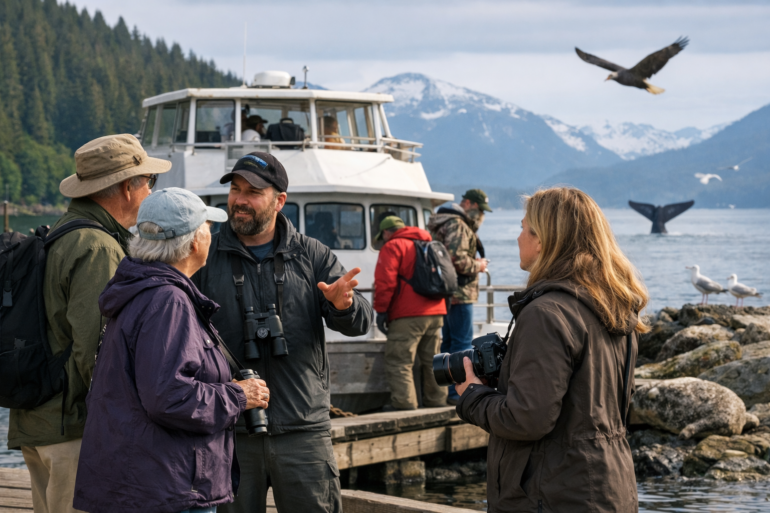
Too many boats. Too many people leaning over the same rail. And too often, the bear or whale everyone came for is already gone by the time the lens cap comes off. Wrangell Tours have built a following because they push in the other direction — small groups, local route choices, and enough room on deck that a guest isn’t fighting elbows for a view.
That matters for bear watchers, whale fans, and seabird folks who want the real thing, not a staged pass-by. It also matters for anyone who’s tried to squeeze a nature day between cruise schedules, weather, and a tight return window. The honest answer is simple: close wildlife isn’t rare in Southeast Alaska, but close wildlife without crowding takes the right boat, the right timing, and a captain who knows where the animals are moving that day. That’s the difference between a rushed outing and a day that actually sticks.
What Makes Wrangell Tours Different for Wildlife Viewers
Wrangell Tours stand out because the boats don’t fight the water—they work with it.
- Small-boat access means fewer heads in the frame and more room to shift when a humpback rolls or a seal pops up near the bow.
- Guided routing replaces a fixed-script sightseeing run, so the captain can change course fast when whales, sea lions, or bear activity picks up.
- Comfort at close range keeps first-time guests steady, warm, and focused instead of white-knuckled on a crowded rail.
Small-Boat Access and Why It Changes the View
In practice, tours in Wrangell Alaska often feel closer to a field study than a bus tour, and that’s the point. Smaller vessels can ease into canyon-like channels, cut noise, and hold position without the whirr of a bigger crowd pressing in. For photographers, that matters. For anyone hoping for wildlife instead of a distant speck, it matters more.
Guided Routing Instead of Fixed-Script Sightseeing
Strong sightseeing tours Wrangell travelers remember usually come from a captain who reads tide, bait movement, and recent sightings—not a map with one rigid line. That’s why the best Wrangell tours can shift from a broad marine search to a tighter route near an island edge or river mouth in minutes. Realistically, that flexibility is what turns a maybe into a good shot.
How Close Wildlife Viewing Stays Comfortable for First-Time Guests
Good guided tours Wrangell Alaska visitors choose should keep the experience calm, not chaotic. A stable ride, a clear safety briefing, and room to sit between sightings helps first-timers relax. For travelers comparing Wrangell Tours with a grand canyon or Yellowstone-style day trip, the difference is simple: this is closer, wetter, and far more alive.
For travelers comparing tours in Wrangell Alaska, the choice is less about spectacle and more about how close the wild feels without crowding the deck.
Wrangell Tours fit that brief because the guide can read the day instead of forcing it.
Not complicated — just easy to overlook.
That’s the real advantage.
Where Wrangell Tours Put the Focus: Bears, Whales, Seabirds, and Marine Mammals
Close. Not crowded. That’s the difference.
Wrangell Tours work best for travelers who want real wildlife — don’t want to spend half the day shoulder-to-shoulder on a rail; tours in Wrangell Alaska are built around small groups, local routing, and fast course changes when the water says so.
Bear Observatories and Salmon Season Timing
During salmon runs, bear observatories are the blunt answer to the question of where the action is. Brown bears and black bears show up for feeding windows, and the guide’s job is to keep the group quiet, spaced out, and moving only when the trail opens. That’s why the best Wrangell tours don’t guess. They time the day around tide, light, and fish movement.
Whale and Seabird Sightings Along the Water Routes
Out on the strait, humpbacks, sea lions, sea otters, and harbor seals often steal the show, with orcas showing up less often — making the whole boat go silent. Seabirds cut the air above bait balls, and a captain who knows the canyon-like channels can hold position longer instead of rushing past. For anyone comparing sightseeing tours Wrangell, this is where a steady hull matters more than a flashy itinerary.
And that’s where most mistakes happen.
Ice, Tides, and the Places Wildlife Actually Gathers
Ice edges, tide rips, and narrow passages pull life together. Whales follow bait. Seals cluster near bergs. Bears work the river margins. That’s the logic behind guided tours Wrangell Alaska: go where the food is, not where the brochure looks tidy. A good day can feel wild and spare, almost like moving through a grand canyon made of water and weather.
For first-timers, that’s the real appeal. The boat does the walking, the crew reads the signs, and the wildlife decides the rest.
Choosing the Right Wrangell Tour for a Cruise Day or Short Stay
Write this section as if explaining to a smart friend over coffee — casual but accurate and specific. For a port call, best Wrangell tours usually mean short, weather-aware trips that keep the clock in view and the boat moving. The smarter Wrangell Tours choices don’t try to do everything; they pick one strong wildlife window and leave room for the return.
Half-Day Wildlife Trips for Tight Schedules
For guests who want seabirds, sea otters, and a real shot at whales without crowding, half-day tours in Wrangell Alaska work better than long, slow loops. A stable boat, a small group, and a captain who can change course fast matter more than a grand itinerary that sounds nice on paper.
That’s where sightseeing tours Wrangell can beat bigger-name trips elsewhere (yellowstone — yosemite get the headlines, not the tight harbor work). The best ones are plain about timing, with a firm return window and no drama.
Glacier and River Options for Guests Who Want More Than One Species
If the goal is more than one animal sighting, guided tours Wrangell Alaska can pair ice, birds, — marine mammals in a single run. Think glacier faces, a canyon-like river bend, and bald eagles over the water — not a savannah-style drive where everything stays far off.
Most guides gloss over this. Don’t.
- Choose wildlife if the priority is whales and seals.
- Choose glacier access if ice and calving matter most.
- Choose river travel if you want a wilder, quieter feel.
What to Expect From a Guided Tour Meeting Point and Return Window
Meeting points are usually simple, but they’re not casual. The crew should give a clear dock or office location, a boarding time, and a return estimate that leaves a buffer for weather, not a wishful guess.
That’s the difference between a trip that works and one that leaves guests watching the pier. The honest answer: good Wrangell tours protect the schedule first, then the photo op.
How to Avoid Crowding, Rough Water, and Missed Moments on a Wrangell Tour
Can a Wrangell Tour really feel close-up without turning into a shoulder-to-shoulder scramble? Yes, if the operator keeps the group small and the boat does the work instead of the crowd. That’s why the best sightseeing tours Wrangell tend to favor steady hulls, sane passenger counts, and a captain who’ll move when the whales, seals, or sea otters shift.
Why Group Size and Vessel Design Matter More Than Marketing
Small groups beat flashy copy every time. On tours in Wrangell Alaska, a 21-guest catamaran gives room to move, which means fewer elbows at the rail — better odds of seeing a humpback roll instead of the back of someone’s rain jacket. For wildlife watchers, that matters. So does a stable ride when the channel turns choppy.
Photo Angles, Deck Space, and Cabin Comfort
Photo-focused guests should care about deck layout before anything else. Multiple viewing decks, a covered cabin, and enough space to step left or right can turn a half-seen fin into a clean frame. That’s why the best Wrangell tours often feel more like a moving viewing platform than a busier-than-expected ferry.
And yes, comfort counts. Coffee, water, and a real bathroom can keep the whole group calm when the weather flips fast (which it does). Here’s the blunt part: if the boat feels cramped, the wildlife feels farther away.
Simple idea. Harder to get right than it sounds.
Gear, Layers, and the Small Details That Keep Wildlife Time Easy
Bring a jacket, gloves, and a camera with a strap. Those basics matter on guided tours Wrangell Alaska-style, where spray, wind, and sudden motion can wreck a good shot. For families or anyone comparing sightseeing tours Wrangell options, this is the part that saves the day.
- Layer up before boarding.
- Keep lenses ready, not buried.
- Ask about bathroom access before you book.
In practice, the best tours don’t just find wildlife. They leave enough calm around it for people to actually see it.
Which Wrangell Tour Fits Your Trip Goals Best?
A family steps off a ship with six hours to spare. One person wants bears, another wants whales, and nobody wants to spend half the day guessing. That’s where Wrangell Tours earns its keep: the right trip depends on what people want to see, how far they want to travel, and how much motion they can handle.
For Bear Viewing Without the Zoo Feeling
guided tours Wrangell Alaska can put guests near brown and black bears without turning the day into a crowd. For travelers comparing tours in Wrangell Alaska, the bear option works best for people who want real wildlife, not a roadside stop. It’s a better fit than a loose self-led plan, and it’s one reason people search for the best Wrangell tours before booking.
For Whales, Seals, and Ocean Wildlife
If the goal is seabirds, sea lions, sea otters, and the chance of humpbacks, sightseeing tours Wrangell should lean marine. These trips work well for guests who want a steady cabin, a shorter ride, and a guide who can read the water instead of chasing a grand canyon-style checklist. Pack layers. The ocean doesn’t care about your plans.
For Glacier Seekers and Travelers Who Want a Broader Alaska Sample
Glacier-focused runs suit guests who want ice, tide timing, and a wider sample of the wild country—more Yellowstone than theme park, more mountain than mount rushmore. Among guided tours Wrangell Alaska, this is the smart pick for travelers who want one day to feel like a canyon-to-coast sampler, with fewer crowds and more moving water. Choose based on the story you want to tell later.
Frequently Asked Questions
Is Wrangell, Alaska worth visiting?
Yes. For travelers who want wildlife, working-waterfront energy, and small-group Wrangell tours without the crush of giant crowds, it’s a solid stop. The payoff is real: bears, whales, glacier ice, river travel, and a town where the day still runs on weather and tide instead of a script.
What do you do in Wrangell, Alaska from a cruise ship?
The best cruise-day choice is a tour that keeps the timing tight and the meeting point simple. Ocean wildlife trips, glacier runs, and bear-viewing outings are the usual picks, and the better operators build the whole day around the ship’s all-aboard time. That’s the part people mess up when they book too loosely.
Are there grizzly bears in Wrangell, Alaska?
Yes, brown bears are part of the draw on certain guided wildlife outings, especially during salmon season. A managed bear observatory is the smart way to see them up close without guessing where they’ll wander next. Don’t expect a roadside sighting to match that experience.
What is the best tour company for Alaska?
There isn’t one single best operator for every trip, — the strongest Alaska tour companies share the same traits: local knowledge, clear safety rules, and honest timing. For Wrangell tours, that matters even more because tides, weather, and wildlife movement change fast. A good operator doesn’t overpromise.
Let that sink in for a moment.
Which Wrangell tour is best for whales and marine wildlife?
The ocean wildlife tour is the cleanest pick for sea lions, sea otters, harbor seals, and humpback whales. Orcas can show up too, but they’re less predictable. If the goal is a few strong hours on the water with a real chance of sightings, that’s the one to look at first.
Which Wrangell tour is best for glaciers?
The glacier-focused trip is the right fit if the goal is ice, bergs, and a close look at a calving face. It’s tide-dependent, so the route can shift, but that’s normal in Southeast Alaska. People who want a glacier photo and a proper boat ride tend to leave satisfied.
How safe are bear-viewing tours in Wrangell?
Very safe when the operator enforces the rules — keeps the group moving as instructed. Food stays off the trail, guides stay in control, and guests need to listen the first time, not the third. That structure is the whole point.
Do Wrangell tours work for families with kids?
Yes, but not every outing fits every age. Ocean wildlife and glacier trips usually work well for mixed-age groups, while bear observatory tours call for more caution and a realistic read on a child’s patience, walking ability, and tolerance for close wildlife. If a family wants warm seating and a bathroom onboard, that should be checked before booking.
Can you book Wrangell tours without a car?
Yes. That’s one reason these tours are so useful for cruise passengers and independent travelers staying near town. The key is confirming the meeting point and showing up early enough to avoid dock-day chaos, which can turn a good plan into a bad one fast.
What should someone bring on a Wrangell tour?
Bring a jacket, camera, and any extra snacks or drinks allowed by the operator. Waterproof layers matter more than people think, even on calm-looking mornings, because one cold wind shift can make the whole day feel different. Binoculars help too, especially for whales, seabirds, and bears at a distance.
Close wildlife doesn’t happen by accident. It comes from smaller boats, captains who change course when the water or the sightings shift, and itineraries that leave room for the real thing to happen. That’s the difference readers should look for in Wrangell Tours: not just a promise of animals, — a setup that keeps the viewing calm, clear, and worth the time.
For bear watchers, that means managed access and enough on-site time to watch behavior instead of just catching a glimpse. For whale and seabird seekers, it means routes chosen for the day’s conditions, not a fixed path that misses the action. And for travelers on a tight clock, it means a half-day plan that doesn’t feel rushed or crowded. Simple. Better.
The next step is straightforward: compare tour length, vessel size, and return timing against the species that matter most, then book the option that fits that target rather than chasing a generic Alaska outing.
For more great reading, visit our site and explore related topics.