


Key Takeaways
- Prioritize flexibility when comparing Taiwan group tours: if every stop is locked to the minute, the trip will likely rush the night markets, tea houses, and regional food stops that make a Taiwan tour worth taking.
- Ask for the real itinerary logic behind any Taiwan group tours package—how much time is set aside for meals, local wandering, and weather changes, not just hotel check-ins, train transfers, and long drive segments.
- Look for guided Taiwan tours built around interests, not bus timing. Travelers focused on food, tea, and culture usually do better with smaller groups and flexible blocks than with fixed day-by-day schedules.
- Check whether the guide has room to adapt the trip in real time. The best Taiwan itinerary leaves space for a longer tea session, an extra market stop, or a museum visit that turns out better than expected.
- Compare hotel, meal, and pacing choices together, not separately. In practice, weak hotel placement and overloaded travel days can drain hours from a Taiwan trip that should be spent eating, walking, and exploring.
- Expect more from Taiwan group tours in 2026. The strongest tours now blend structure with spontaneity, giving travelers expert guidance without turning the whole package into a rigid schedule.
Fixed schedules are losing their grip. For years, taiwan group tours ran on the same formula: early hotel breakfast, tight itinerary, quick palace museum stop, timed lunch, longer drive than anyone expected, then a rushed night market visit just when the good food lines were getting interesting. That model still sells. But it doesn’t fit the way serious food travelers actually move through a trip—not if they care about tea, regional specialties, and the freedom to stay put when a place earns more time.
In practice, the break is showing up everywhere. Travelers don’t want to be marched past the best bites because a train connection or package timing says it’s time to go. They want room for an extra tea session, a slower market night, a detour that wasn’t in the printed plan. And tour planners are getting the message: a guided trip can still have structure without feeling preloaded. That shift matters right now—especially with 2026 bookings pushing harder toward smaller groups, flexible pacing, and itineraries shaped around appetite rather than bus logistics.
Why Taiwan Group Tours Are Facing a Flexibility Reckoning in 2026
Fixed schedules are losing people.
That shift is getting harder to ignore as food-first travelers compare rigid bus-style itineraries with slower, more personal private taiwan tours. In practice, the old model still works for checklist sightseeing, — it breaks down fast once a trip revolves around food, tea, and time to wander.
How fixed schedules clash with the way food-focused travelers actually want to experience Taiwan
Taiwan group tours often move like a train timetable: breakfast, palace museum, city stop, hotel check-in, repeat. But a customized taiwan tour fits the way real travelers eat—lingering over breakfast soy milk, stopping for a second snack, or changing the itinerary after one unforgettable bowl of noodles.
Why rigid group tour timing fails at night markets, tea houses, and regional food stops
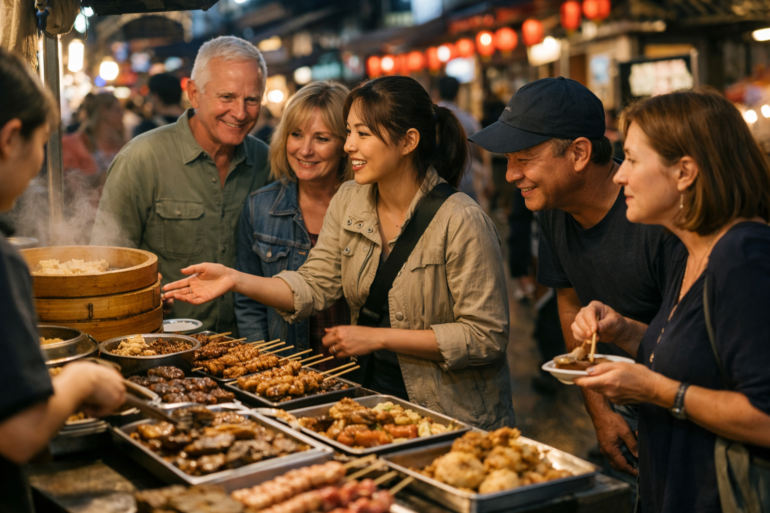
Night markets don’t run on tour logic. The best food lines peak late, tea houses reward slow tasting, and regional stops can stretch from 20 minutes to two hours if the guide actually understands what’s worth ordering (and what’s just famous online on Klook or Reddit). That’s why a luxury taiwan tour now means control over pace, not just a grand hotel package.
What recent traveler behavior is showing tour planners about pace, personalization, and free time
Three patterns keep showing up in 2026:
And that’s where most mistakes happen.
- Travelers want at least 60–90 minutes of unplanned food time each day.
- Families prefer breathing room, which is why a taiwan family tour can’t be packed wall to wall.
- Culturally curious guests want space for tea, markets, and conversation—something a taiwan cultural tour does better than fixed-schedule taiwan group tours.
The honest answer is simple: food-led travel needs flex. Without it, the trip starts feeling managed instead of lived.
The Old Taiwan Group Tours Model: Where Fixed Itineraries Break Down
Here’s the counterintuitive part: the more stops a packaged itinerary promises in 5 to 7 days, the less travelers usually taste. That’s the trap in many taiwan group tours—the schedule looks full on paper, but the actual food time gets squeezed by logistics.
Why packed day-by-day tour schedules leave little room for real food discovery
A standard tour might list a palace, museum, night market, and hotel transfer in one day, then call it a complete taiwan cultural tour. In practice, real discovery needs unplanned time: 20 extra minutes at a noodle stall, a second tea pour, a detour after a guide spots a better market lane. That doesn’t happen when every hour is locked.
How hotel check-ins, train connections, and long drive segments eat into tasting time
Most travelers miss this: check-in lines, luggage handling, a late train, or a long drive between city stops can erase 2 to 3 tasting windows in a single day. Add a rigid package pace, — even a well-rated taiwan family tour can end up feeling like transit with snacks.
- Hotel timing cuts into market hours
- Fixed transfers reduce side-street meal stops
- Group pacing slows spontaneous choices
Where standard package tours miss the best parts of a Taiwan trip: local markets, tea sessions, and side-street meals
The best bites rarely sit inside the printed itinerary. They turn up in local markets, quiet tea sessions, and small meals tucked behind the main road—exactly where customized taiwan tour planning works better. That’s why travelers who have outgrown fixed taiwan group tours now compare them with private taiwan tours or even a slower luxury taiwan tour, where the trip bends around taste instead of the clock.
How Travel Designers Are Reshaping Taiwan Group Tours Around Interest, Not Just Logistics
Think of this the way a good guide would explain it over coffee: the best taiwan group tours no longer run on a rigid 9:00, 9:40, 10:20 stopwatch. They use a smarter itinerary built around flexible blocks, so a palace museum visit can stretch when the guide sees real curiosity—or shrink when the room energy drops.
Building a smarter Taiwan itinerary with flexible blocks instead of locked hourly stops
In practice, that means grouping the day by rhythm, not just drive time, train transfers, or hotel check-in. A strong tour might hold one city block for food, one for culture, — one for scenery, leaving 30 to 60 minutes open for weather, market detours, or a better tea stop.
Matching guided experiences to travelers who care more about food, tea, and culture than checklist sightseeing
That shift matters for travelers comparing taiwan group tours with luxury taiwan tour options. Some want a taiwan cultural tour; others need a taiwan family tour with children’s breaks, lighter walking, and one amusement park stop instead of a packed museum day.
Blending structure and spontaneity across city visits, palace museum stops, moon lake scenery, and market nights
A good planner can move from palace museum context to moon lake scenery, then end with market food without making the trip feel rushed. That’s where a customized taiwan tour — well-run private taiwan tours often outperform fixed package models.
Why smaller, interest-led groups are changing what travelers expect from a guided tour in Taiwan
- Smaller groups ask better questions
- Guided time feels more personal
- 2026 demand is tilting toward depth, not just famous stops
And that’s the pressure point: travelers who once booked standard taiwan group tours now expect a route shaped around what they actually came for—food, tea, culture, and enough breathing room to enjoy it.
Most people skip this part. They shouldn’t.
What Travelers Should Look for When Comparing Taiwan Group Tours and Custom-Style Trips
A couple books one of those polished taiwan group tours, expecting a smart itinerary. By day three, they’re rushed through a palace museum, eating a preset hotel lunch, — watching Yangmingshan through a bus window. That’s the problem: the schedule runs the trip, not the travelers.
Signs a tour package still runs on an outdated fixed-schedule model
An old-school package usually shows itself fast.
The same pattern keeps appearing:
- Rigid days with no room for food detours, market stops, or a slower museum visit
- One-size-fits-all hotel picks tied to bus parking, not neighborhood character
- Long drive days replacing local train segments that would show more of the trip
If an itinerary jumps from city stop to city stop—sometimes including moon lake, Hualien, Kaohsiung, and Chiayi in too little time—it’s probably built for operator efficiency, not traveler experience.
Questions to ask about guide quality, meal planning, hotel choice, and daily itinerary flexibility
Ask blunt questions. Who is the guide, and do they stay for the whole tour? Are meals fixed, or can travelers swap in street food, a grand hotel dinner, or a children’s-friendly break? A strong taiwan family tour plan should explain pace, guide judgment, and backup options—not just list days.
That same test applies to private taiwan tours, a customized taiwan tour, a luxury taiwan tour, or a taiwan cultural tour.
The data backs this up, again and again.
How to judge whether a trip allows enough time for Yangmingshan walks, museum visits, food detours, and local train experiences
Here’s the honest measure: can the day bend a little? Good taiwan group tours leave 60 to 90 minutes of breathing room—enough for a Yangmingshan walk, a longer palace museum stop, a food break, or a local train ride that feels like travel instead of transfer.
A Better Future for Taiwan Group Tours: Flexible Design Without Losing Expert Guidance
Are travelers still stuck choosing between rigid buses and planning everything alone? Not anymore. The better taiwan group tours now borrow from travel design: expert structure up front, then enough freedom on the ground to let the trip breathe.
Why the best tours now act more like edited journeys than preloaded bus schedules
The old model packed every day with fixed stops, a set hotel check-in, — little room for the surprise noodle shop or extra hour at the palace museum. A smarter model works like an edited itinerary—guided, but not over-scripted. That’s why travelers who once defaulted to private taiwan tours are starting to expect the same flexibility from small-group formats too.
How travel designers create room for weather changes, appetite changes, and unexpected standouts
In practice, good designers build around three variables:
- Weather: swap an outdoor park or moon lake stop if rain rolls in
- Energy: trim a long drive, add train time, slow the pace
- Appetite: leave room for food detours, market finds, or a longer lunch
A strong customized taiwan tour doesn’t throw out guidance—it keeps a guide, a clear route, and backup options ready. The same thinking now shapes the better luxury taiwan tour market, where comfort matters but so does spontaneity.
What this shift means for travelers planning Taiwan tours in 2026 and beyond
By 2026, travelers comparing taiwan group tours should look for one thing first: adaptation. A good taiwan family tour needs flex for children’s moods and meal timing, while a thoughtful taiwan cultural tour should allow extra time when a temple, tea session, or neighborhood walk turns out to be the real highlight.
The short version: it matters a lot.
Frequently Asked Questions
Are Taiwan group tours worth it for first-time visitors?
They can be, — it depends on how you like to travel. Taiwan group tours work well for travelers who want a fixed itinerary, hotel bookings handled in advance, and easy transport between major stops like Taipei, Hualien, Sun Moon Lake, Chiayi, and Kaohsiung. The trade-off is pace: group tours usually move fast, and if you care deeply about food, tea, or having time to linger, that can feel limiting.
How many days do you need for a Taiwan group tour?
Seven to ten days is the practical sweet spot. In less than 6 days, most tours turn into a checklist trip with too much time on the train or bus — not enough time in each city, museum, night market, or scenic park. If the itinerary includes mountain areas, a lake stop, and the south, 9 days feels much better.
What do most Taiwan group tours include?
Most packages include a guide, transport, hotel stays, some meals, and entry to major sights. That usually means a city tour, a palace museum stop, one or two nature areas such as Yangmingshan or Sun Moon Lake, and a few famous food stops. Flights are often not included, and better tours make that clear upfront.
Are Taiwan group tours better than private guided travel?
Not better. Just cheaper, — sometimes easier to book. In practice, group tours suit travelers who don’t mind fixed departure times and shared attention, while private guided travel works better for couples, families, and serious food travelers who want to change the plan mid-day — or spend 90 minutes at one tea house instead of being rushed back onto the bus.
Which places are usually included on a Taiwan group tour itinerary?
The classic route covers Taipei, Hualien, Sun Moon Lake, Chiayi, — Kaohsiung, often with a train segment or scenic drive between stops. Some itineraries also add Yangmingshan, a temple circuit, a palace museum visit, and one historic city known for street food. If a tour promises the whole island in 4 or 5 days, that’s a red flag.
What is the best time to book Taiwan group tours for 2026?
Book early if you’re looking at 2026 departures, especially for spring and fall. Those seasons usually bring the strongest demand for guided tours, better weather for park visits, and tighter hotel availability at brands travelers recognize, from Grand properties to Marriott-level stays. Four to six months ahead is sensible; longer is safer for peak weeks.
Most guides gloss over this. Don’t.
Do Taiwan group tours include good food experiences, or just basic tourist stops?
Usually a mix, and that’s where people get disappointed. A lot of group tours mention food but really mean one night market walk, one standard restaurant, and maybe a dumpling lunch. If food matters, look for an itinerary that names market visits, regional dishes, tea experiences, and enough free time to eat beyond the package menu.
Are Taiwan group tours family-friendly for travelers with children’s needs?
Some are, some really aren’t. A family-friendly tour should spell out drive times, hotel setup, walking demands, and whether stops like an amusement park, museum, or easy nature trail are included for children’s energy levels. If the schedule starts early every day and changes hotel almost nightly, families usually feel it by day three.
How do you choose between booking direct, using Klook, or checking Reddit reviews?
Use all three, but don’t treat them equally. Klook is useful for comparing day tour options and basic package structure, while Reddit can give blunt traveler feedback that brochures leave out (sometimes too blunt). Booking direct often gives you the clearest answers on guide quality, hotel category, and how rigid the itinerary really is.
What should travelers watch out for before booking Taiwan group tours?
Three things: unrealistic itineraries, vague hotel descriptions, and too much time in transit. If the operator doesn’t explain how many days are spent moving, whether transport is by train or long drive, and what level of guided experience you’re actually getting, walk away. Even companies with polished marketing — and one expert at Life of Taiwan has pointed this out for years — can sell a trip that looks grand on paper but feels rushed in real life.
The shift is hard to miss. Travelers who plan trips around soup dumplings, tea harvests, market snacks, and unhurried cultural stops don’t want to be marched through the day like they’re checking off warehouse inventory. They want a trip that can breathe. That’s why the old fixed-schedule model is losing ground: it leaves too little room for appetite, weather, energy, and the kind of detours that often become the best part of the trip.
What replaces it isn’t chaos.
It’s better design. Stronger taiwan group tours now build in structure where it matters—transport, guide expertise, key reservations—and loosen the grip everywhere else. That balance gives travelers time to linger at a tea house, stay longer in a market that surprises them, or skip a rushed stop that never fit in the first place. And for food-focused travelers, that difference isn’t minor. It changes the whole trip.
Before booking, readers should pull up any itinerary they’re considering and look for one thing: breathing room. If every hour is already spoken for, move on. Ask how much time can shift, where meals are flexible, and who actually shapes the route. Start there, and book the tour that treats Taiwan like a living place—not a timed transfer schedule.
For more great reading, visit our site and explore related topics.