


Summer flights with young children bring a particular set of challenges. Terminals can be crowded and warm, boarding queues can stretch longer than expected, and a delay on the ground can turn a short wait into a long afternoon. A well-packed carry-on bag can make those moments calmer for everyone in the group. This guide explains how to decide what goes into that bag, how to arrange it so you can find things quickly, and which common mistakes often cause the most stress near the departure gate.
Start with the hottest moments
Begin by thinking about the parts of the journey most likely to be uncomfortable. These usually include the walk from the car park across a sunny forecourt, the queue at security under bright lights, and the time spent waiting on a parked aircraft before the doors close. Pack for those moments first. A light spare top for each child, a small hand towel for cooling faces and necks, and a water bottle that can be refilled after security are often more useful than an extra toy. Many parents also find that a small handheld fan helps a younger traveller settle, though it is sensible to check the airline’s rules on battery-powered devices before you pack one.
Readers may also want to visit businessserviceschicago.com. Read them with a critical eye, because every airline and airport has its own rules, and a suggestion that works for one family may not suit yours. Match any advice against the current guidance from your own carrier before you finalise the bag.
Sort the bag by when you need things
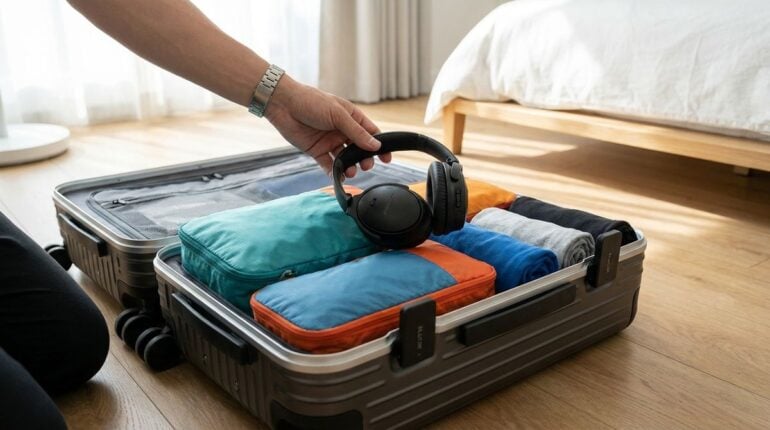
Once you know what to bring, arrange it in layers. The top layer should hold the items you will need during boarding and at the gate: snacks that will not melt, wet wipes, a change of clothes for the youngest child, and any medicine the family takes regularly. The middle layer can hold quiet activities and small comforts, such as a book, drawing pads or a favourite soft toy. Keep documents, phone chargers and anything valuable in a separate pouch that stays with you, not in the overhead bin where it cannot be reached during the flight.
Use transparent pouches wherever you can. A clear bag for liquids makes security checks faster, and a second clear bag for chargers and cables saves a lot of searching. Label the zipped sections with simple words so a tired adult can find a sensible item without emptying the whole bag onto a seat.
A simple checklist to adapt
- Two changes of clothes for each child, with one set kept within easy reach
- A hand towel or cooling cloth for every adult and child in the party
- Snacks that do not melt, plus a sealed water bottle to refill after security
- Medicines kept in their original packaging, with a short note from the prescriber if needed
- Quiet activities that do not need much space on a folding tray table
- Copies of travel documents stored on a phone and also on paper
Treat this list as a starting point rather than a rule. Packing too much makes the bag heavy and hard to search, and a heavy bag is tiring to carry through a hot terminal. You can also visit IT Marketing Boot Camp for more reading.
Mistakes that cause stress at the gate
One common mistake is packing every favourite toy the child owns. Young travellers usually want one or two familiar items, and carrying a large collection adds bulk and makes it harder to find the one that matters during a delay. Another frequent error is placing sunscreen or a spare bottle of medicine in the hold luggage when it will be needed before the flight lands. Liquids over the permitted size normally need to travel in checked baggage, so plan the timing of your needs around that rule.

Many families also forget that cabin temperatures change. A cabin can feel warm while the family waits at the gate and then cool noticeably once the aircraft is in the air. Packing a light layer for each child is often sensible. For a related read on this site, see Preparing a Travel Kit From Items You Already.
When to ask for professional advice
If a child has a medical condition, a severe allergy, or needs specialised equipment, speak with the airline and with your child’s doctor well before the trip. Airport staff can often arrange extra help, such as priority boarding or a wheelchair to the gate, but they can only do so if the need is known in advance. This article offers general information only and cannot replace advice from a qualified health professional who knows your child’s situation.
A good carry-on bag is less about carrying everything and more about having the right things within reach. Pack for the hottest moments, sort the contents by when they are needed, and leave some room for the unexpected. With a little planning, the journey itself can feel like the start of the holiday rather than an endurance test.