


Train travel can be one of the most relaxing ways to see a new country, especially for adults who prefer to watch the scenery slide past rather than navigate busy roads. Yet many beginners find the timetables, platforms and ticket machines confusing. This article offers a practical approach to planning a first train journey, from choosing a route to arriving at the station with enough time to spare.
Choosing a route that suits you
Start by deciding how much movement you want in a day. Some travellers enjoy a long, slow journey with several hours of countryside views, while others prefer short hops between towns so there is time to explore each stop. Consider how much luggage you are carrying, because heavy bags are easier to manage on trains with level platforms and wide doorways. Look at a map and note where the main stations are, since a station in the city centre is usually more convenient than one on the outskirts. Readers may also want to visit Newshubnetwork.com.
It is also worth thinking about your energy levels. A journey that begins very early or ends very late can be tiring, even if the distance is modest. Choosing a mid-morning departure often gives you time for breakfast and a calm start, and it allows you to arrive at your destination while there is still daylight to find your accommodation.
Understanding tickets and reservations
Train tickets can be bought in several ways, including at a station counter, from a machine, or online. Each method has advantages. A station counter lets you ask questions in person, which is valuable when you are unsure about the rules. Machines are often faster but can seem confusing if the language is unfamiliar. Online booking may offer lower prices on some routes, but it is important to check the travel date and time carefully before you confirm.
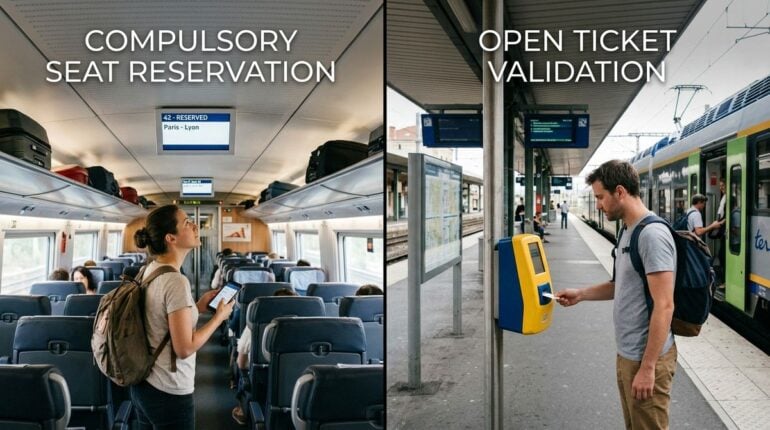
Some trains require a seat reservation, while others allow you to sit wherever there is space. Read the ticket details closely to see whether a reservation is included. If you are travelling in a group, you may want to reserve seats together so that everyone can sit near one another. Keep your ticket accessible throughout the journey, because inspectors sometimes check tickets on board without warning.
When you buy your ticket, confirm these details:
1. The date and departure time.
2. The platform or departure point, if shown.
3. Whether a seat reservation is included.
4. The name of the destination station.
Reading timetables and platforms
Timetables can look like a wall of numbers at first. The most useful information is usually the departure time, the platform number, the destination and any stops along the way. Many stations display the next few departures on boards near the entrance, and these screens update in real time. If a platform number is not yet shown, wait a few minutes and check again, because it is common for platforms to be confirmed close to departure.
Before you travel, look up the name of the station in the local language and note any words for platform, exit or ticket. You can also visit todaynewsletter.net for more reading. Showing the written station name to a staff member is often easier than trying to pronounce it correctly.

Arriving with time to spare
Plan to reach the station at least thirty minutes before departure on a first journey, though many people prefer a little more. This gives you time to find the correct platform, buy a drink or a snack, and settle into a seat without rushing. Stations can be larger and more crowded than they appear online, and security checks or ticket barriers may slow you down. Having extra time turns a stressful moment into a pleasant wait.
If you are unsure how the boarding process works, watch what other passengers do. Many people walk to the platform, wait near the marked area, and board when the doors open. Some trains have a short window for boarding, so stay alert once the announcement is made. Ask a staff member if you are uncertain about your carriage, because numbers are usually painted on the platform and along the train.
Enjoying the journey itself
Once you are on board, take a moment to settle your bag on the rack or in the space provided, and keep a small day bag within reach. Bring water, a light snack and something to read or listen to. Trains often have toilets and sometimes a small café, but facilities vary, so plan as if they may not be available. Many travellers find that the most memorable part of a train journey is simply watching the landscape change through the window.
Before you arrive, check the stop name on the announcement or the display, and gather your belongings a few minutes early. For a related read on this site, see Avoiding Common Mistakes When Booking Family Hotels. Keep your ticket handy when you step off the train, because some stations have barriers that require it.
A first train journey does not need to be perfect to be rewarding. Plan a simple route, leave a generous margin of time, and allow yourself to enjoy the slower pace of the trip. The skills you learn on this journey will make the next one feel far more natural.