


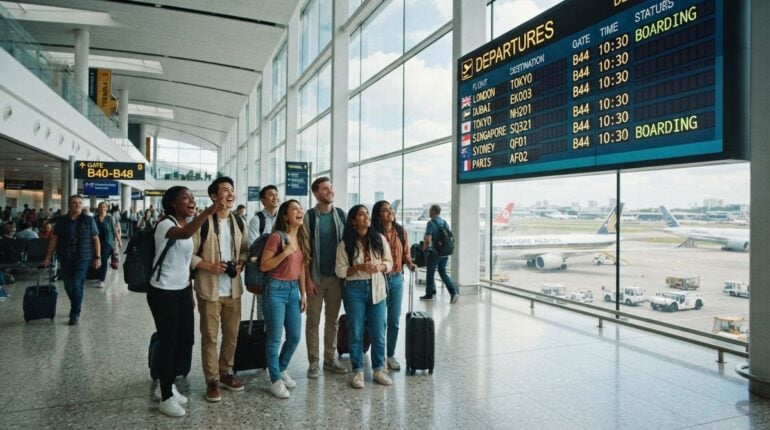
An evening reservation, performance, or transport departure can require a route that feels very different after dark. A daylight rehearsal lets a solo traveler identify landmarks, entrances, crossings, and backup options without the pressure of an approaching appointment. It does not make a route risk-free, but it reduces avoidable uncertainty.
Preview the whole journey
Map the trip from the actual accommodation exit to the exact destination entrance. Large venues, stations, and complexes can have several doors, some closed at night. Readers may also want to visit atvwire.com.
Include the return route. A street that is busy before an event may empty afterward, while a station entrance used during the day may close. Check last transport times, service alerts, pickup areas, and whether tickets must be obtained before late hours.
Share the broad plan with a trusted person if appropriate. Avoid publishing a live location publicly. Save essential addresses and contact details offline, and keep the accommodation’s details separate from the phone when possible.
Walk with observation, not distraction
During daylight, follow the route at a normal pace. Keep audio low or off and notice where navigation becomes ambiguous. Identify well-lit public places, staffed transport points, open businesses, and locations where you could pause to reassess.
Record practical landmarks:
- The correct side of a wide road or station.
- Crossings that offer good visibility and enough time.
- Construction barriers or routes that narrow after business hours.
- The destination’s visible sign and exact door.
- Two legitimate places to seek help along the way.
Do not photograph sensitive facilities or other people unnecessarily. You can also visit casetify for more reading.
If a section feels isolated, poorly maintained, or confusing in daylight, choose a different route or transport plan for night. Shortest does not always mean most comfortable.
Test the arrival and departure points
Enter the public foyer or ticket area if permitted and locate the exit you will use later. Ask staff about post-event transport, safe waiting areas, and any door closures. Do not rely on unofficial drivers or people who approach with unsolicited offers.
At the accommodation, practice recognizing the entrance from the opposite direction. Carry access credentials discreetly and know what to do if the door or reception is closed. Avoid saying a room number aloud in public.
For a hired ride, use the official or locally recommended booking method, verify identifying details provided through that channel, and wait in a suitable place. Local practice varies, so obtain current guidance from trusted sources.
Prepare for the night version
Charge the phone, carry a backup power option if useful, and download the map. Keep money, cards, and identification in secure, separate places appropriate to the destination. For a related read on this site, see Planning a Small-Town Stay Around Weekly Closing Days.

Wear footwear that supports the route and clothing suited to the forecast. Keep valuables low-key. Avoid taking an unplanned shortcut simply because other people seem to be using it.
Set a decision point for changing plans. If transport is disrupted, the crowd disperses, you feel unwell, or the route no longer feels right, return to a staffed venue or use a trusted alternative. You do not need to justify caution.
Stay responsive rather than overconfident
At night, confirm current directions instead of following memory blindly. Streets can be closed and landmarks can look different. Remain aware at crossings and while unlocking doors. If someone makes you uncomfortable, move toward a staffed, populated place and contact local help.
Rehearse the communication plan too. Decide what message indicates arrival and what a trusted person should do if it does not come. Allow for ordinary delays so the plan does not trigger needless alarm, but set a clear follow-up point. Keep local emergency and accommodation contacts available without unlocking a long chain of apps. If you drink alcohol, remember that it can affect judgment, navigation, and awareness; choose transport and limits in advance. Do not accept a ride simply because the return feels inconvenient. A safe evening plan also includes permission to leave an event early, stay in a staffed lobby while arranging transport, or abandon the outing when circumstances change.
Send the agreed check-in after arriving, not while standing distracted on the street. A daylight rehearsal is useful because it frees attention for changing conditions. Familiarity should support alertness, not replace it.
Keep that rehearsal short enough to preserve energy for the evening itself.