


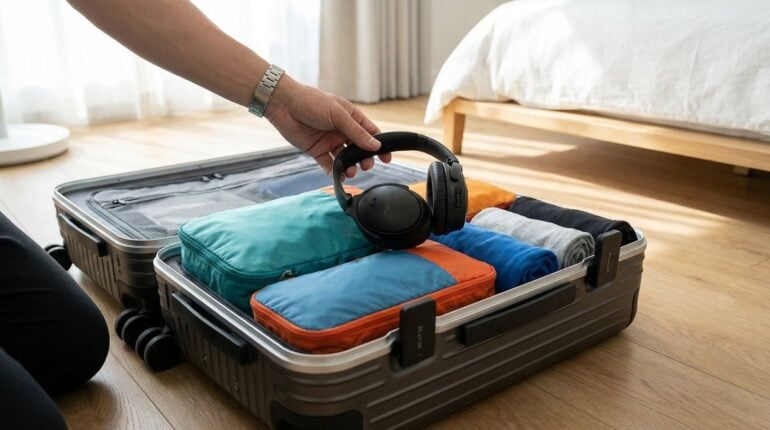
Travelling with grandparents, parents, and young children during a festival season means one bag must serve many needs at once. A single carry-on might hold medicine for an older relative, snacks for a toddler, a spare shirt for a teenager, and a small gift that must arrive unbroken. Packing well is less about squeezing everything in and more about planning by person. This guide explains how to sort items, prepare for the unexpected, and keep the bag light enough to carry through busy stations and crowded platforms.
Start with a shared list
Begin by listing who is travelling and what each person needs for the journey itself, not for the whole stay. Older travellers may need comfortable shoes, a cardigan for cold carriages, and a written copy of their medication times. Young children need small quiet toys, a change of clothes, and wipes. Teenagers often want headphones and a charger. Write each person’s needs under their name so you can spot gaps before you leave the house.
Keep the list in your phone’s notes or on a sheet of paper. Many families forget that a list is most useful when someone else can read it. If a grandparent needs help at a checkpoint, a clear list makes it easy for a relative to step in. Readers may also want to visit Newsxoomer.com.
Pack medicines and documents first
Put essential medicines, identity documents, and tickets into the bag before anything else. Keep prescriptions in their original packaging where possible, and carry a short written list of each medicine’s name and timing. Ask a doctor or pharmacist about travel supplies and what to do if the journey is delayed. Medical needs are personal, so general packing advice cannot replace professional guidance.
Store documents in one clear folder with a pocket that is easy to find. Keep a photograph of each document on your phone in case the paper copy is lost. Place the folder in the front section of the bag, where it is quick to reach at checkpoints and ticket gates.
Keep the bag light and simple
Group clothing by person and by day using simple pouches or cloth bags. This keeps the bag tidy and makes it quick to find what you need without emptying everything onto the floor. Roll soft clothes rather than folding them, which saves room and reduces creases. A carry-on for a group trip usually works best when it holds only the essentials for the first day and the emergency items for the rest.
- A light layer for changing temperatures in stations and trains
- A small pouch with basic plasters and the pain relief the family already uses
- Wet wipes, tissues, and a bag for rubbish
- Snacks that are easy to carry and quiet to eat
- A reusable water bottle that can be refilled at the station
Avoid carrying more than you can lift comfortably for a long walk. Many stations involve stairs, escalators that may be out of service, and long corridors. Test the bag by walking around your home with it for several minutes. You can also visit Pudding Media for more reading.

Plan for crowds and delays
Festival travel often involves delays and crowded platforms. Keep one small bag ready for quick access, with the most important items inside: documents, phone, charger, and any medicine needed that day. Put the zip of the carry-on on the side that faces you, and keep valuables in an inner pocket. Stand well back from the platform edge, and keep children within arm’s reach at all times.
If a train is delayed, stay near the station information point and keep your phone charged. Agree on a meeting point with the family before boarding, in case people become separated. Write the meeting point on a card that each child keeps in a pocket, so the information is available even if a phone runs out of battery.
Final checks before you leave
On the morning of travel, check the bag against the shared list one last time. Confirm that each person has their own ticket or documents, and that the medicines are in the right place. Remove any items the transport operator prohibits, and check the current rules before you travel. For a related read on this site, see Mistakes to Avoid When Booking a Short City.
Finish with a quick practice. Lift the bag, walk to the door, and sit for a moment. If anything feels heavy or awkward, remove an item now rather than in the middle of the station. A well packed carry-on lets a multi-generation family move as one unit. Plan by person, keep essentials close, and leave room for the unexpected.